Focus Areas - Microelectronics And Supply Chain Resilience
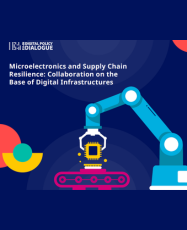
Microelectronics and Supply Chain Resilience: Collaboration on the Base of Digital Infrastructures
Microelectronics And Supply Chain Resilience
Context
Semiconductors are the backbone of the global digital economy, powering everything from smartphones and electric vehicles to advanced manufacturing and critical infrastructure. Growing geopolitical uncertainties, rising demand, and supply chain disruptions have made semiconductor resilience a strategic priority worldwide.
The EU and India are deepening cooperation on semiconductors to ensure supply chain security, promote technological innovation, and reduce over-dependence on a few geographies. At the national level, the EU has launched the EU Chips Act, aiming to double Europe’s global market share in semiconductors by 2030 and strengthen its technological sovereignty. India, through the India Semiconductor Mission (ISM), is seeking to position itself as a trusted global hub for chip design, manufacturing, and talent development.
Together, their partnership is focused on three strategic pillars: supply chain resilience, joint innovation and research, and skilling the workforce to meet the semiconductor industry’s future needs.
Objectives
-
Strengthening the shared commitment of the EU and India towards a digital future that is open, democratic, secure, and human-centric.
-
Co-creating capacity, capability, and credibility, and supply-chain resilience in semiconductors.
-
Promoting industry–academia collaboration on semiconductor skilling programmes, joint curricula, and mutual recognition of certifications.
Our Approach
-
Host regular dialogues between EU and Indian policymakers, industry, and research institutions on semiconductor ecosystems and opportunities for collaboration.
-
Host dedicated business roundtables to foster cooperations between European and Indian semiconductor companies, including start-ups and small- and medium-sized enterprises.
-
Aligning action within the Team Europe approach by fostering exchange between EU Member States working on micro-electronics and supply chain resilience with Indian partners.
-
Support semiconductor cooperation with the broader framework of the EU-India Trade and Technology Council.
-
Develop a joint policy paper on semiconductor skills and talent gaps between EU and Indian universities.
Current State of Cooperation
Under the EU-India Trade and Technology Council (TTC), Working Group a Memorandum of Understanding (MoU) on semiconductors was signed in November 2023, laying the foundation for cooperation on ecosystems, supply chain resilience, innovation, and market information sharing.
A policy paper analysing the gaps in semiconductor skilling in EU and Indian universities is underway.
Key Areas for Further Collaboration
- Support through research in the form of policy papers to facilitate exchange of semiconductor professionals and students
- Networking events and roundtables to foster partnerships between industries in both regions.
Moving Forward
- Policy paper on semiconductor skills and talent gaps between EU and Indian universities to support the skills and talent exchange in the two regions.
- Strengthening cooperation across priorities on semiconductor capacity building and market resilience between both EU and India.
Publications